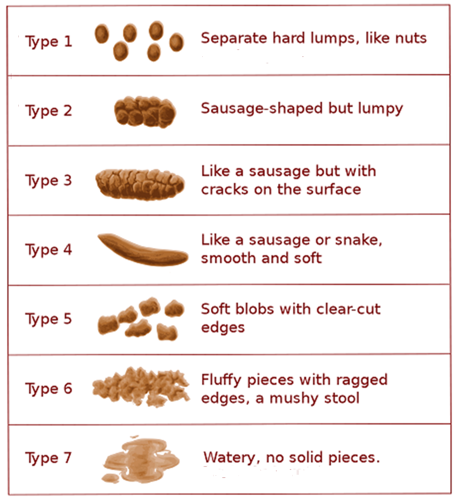
Constipation can be due to a number of factors. Some of these may be related to your Crohn’s or Colitis, and some not. You may have a combination of factors that together, lead to constipation. It’s not always possible to identify exactly what has caused it.
Here we list some of the most common causes that may affect people with Crohn’s or Colitis. Many of these also apply to people who are living with a stoma.
Low-fibre diet
Many people with Crohn’s or Colitis are not getting enough fibre in their diet. This is a common risk factor for constipation.
Fibre makes it easier for digested food to travel through your bowel. When you do not have much fibre in your diet, digested food takes longer to travel through your bowel. This can increase the risk of constipation.
Some people with Crohn’s or Colitis find that certain high fibre foods make their symptoms worse. If this has been a problem for you, you may have lowered the amount of fibre in your diet. When your symptoms flare-up, you may not even feel like eating much at all. But not eating much and a low fibre intake can trigger or worsen constipation. You may find you end up in a cycle with symptoms of diarrhoea and constipation, depending on your fibre intake.
Sometimes people lower their fibre intake after having a stoma, to help manage with stoma bags. This can also lead to constipation.
See what can help with constipation for more information about managing your fibre intake with Crohn’s or Colitis.
Low fluid intake
Not drinking enough is another common risk factor for constipation. This can lower the water content in your poo, making it hard and difficult to pass.
NHS guidelines recommend adults should aim to drink about 6 to 8 standard sized glasses of fluid a day. We have more on this in our section on what can help with constipation.
Low activity levels
Not being very active can contribute to constipation. Lack of activity can slow the movement of food and poo through your bowel.
It’s not always easy to be physically active when you have Crohn’s or Colitis. Symptoms like tummy or joint pain, fatigue, or urgently needing to poo can get in the way. If you are not moving much during the day, this may be a factor in your constipation.
See what can help with constipation for tips on keeping active.
Toilet habits
The following factors can contribute to constipation:
- Having difficulties accessing a toilet
- Lack of privacy
- Feeling stressed or hurried
These may all be things that you have as part of daily life with Crohn’s or Colitis.
Irritable bowel syndrome
Constipation can be a symptom of irritable bowel syndrome (IBS). IBS is a different condition to Inflammatory Bowel Disease (IBD). IBD includes Crohn’s Disease, Ulcerative Colitis and Microscopic Colitis. IBS can cause similar gut symptoms to IBD, but without bleeding or inflammation of the bowel. There can be some overlap between IBS and IBD. Some people with Crohn’s or Colitis can get IBS-like symptoms, such as constipation, even when their condition is under control.
Inflammation of the rectum
If you have inflammation in your rectum, this may cause severe constipation. The rectum is the end of your large bowel. When you have inflammation only in this part of your gut, it’s known as proctitis.
Other symptoms of proctitis include:
- Feeling that you need to poo, even when your bowel is empty. This is known as tenesmus.
- Urgently needing to poo.
- Passing blood from your bottom.
Changes to the bowel
For some people with Ulcerative Colitis, poo seems to travel more slowly through their large bowel. There is limited evidence for why this is. But it’s thought to be related to inflammation and scarring in areas of the large bowel affected by Ulcerative Colitis. This seems to affect how well the large bowel moves, increasing the time it takes for poo to travel along the bowel. This can lead to constipation.
Small-intestinal bacterial overgrowth (SIBO)
Constipation can also be a symptom of a condition called small-intestinal bacterial overgrowth (SIBO). In SIBO, more bacteria grow in your small bowel than usual. It can happen if you have a condition that affects the structure of your gut, or how it works. This includes Crohn’s and Colitis.
Certain medicines
Constipation can be a side effect of some medicines. You may be more likely to take some of these medicines with Crohn’s or Colitis, including after stoma surgery. Common examples include:
- Medicines for diarrhoea, such as loperamide
- Some painkillers, such as codeine and other opiate medicines
- Antidepressants
- Blood pressure medicines, such as calcium channel blockers and diuretics
- Iron and calcium supplements
Blockage or narrowing in your bowel
Less often, constipation can be due to a blockage or narrowing in your bowel. This can be a complication of Crohn’s or Colitis. It can be a result of long-term inflammation of the gut. This inflammation can lead to thickening and scarring of the bowel wall. The resulting narrowing, known as a stricture, can make it harder for poo to pass through.

 SEARCH
 Constipation is often not recognised as a symptom of Crohn’s Disease, Ulcerative Colitis or Microscopic Colitis. But it affects many people with these conditions. Managing constipation can be particularly difficult if you have Crohn’s or Colitis. But there are lots of things you can try that may help.